
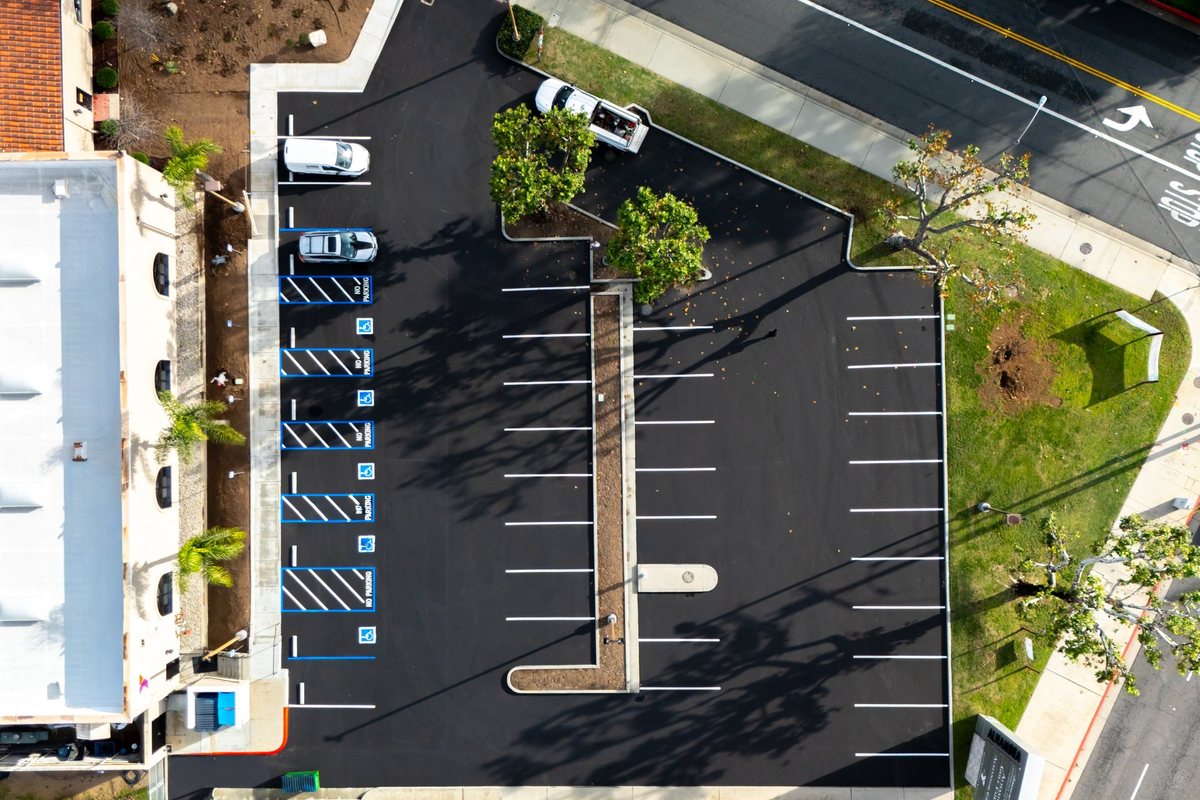
For most commercial properties, the answer is every two to three years. But traffic volume, sun exposure and your local climate can pull that window shorter, and seal coating at the right time is one of the highest-return maintenance decisions a property owner can make.
The figures on this page are general industry ranges for the Southwest, published to help owners budget. They are not a quote, an estimate or an offer. Actual pricing depends on your property and is provided only in a written proposal. Request a proposal.
Seal coating is a thin protective layer applied over asphalt. It is not structural, it will not fix cracks or potholes, but it shields the surface from the two things that age asphalt fastest: UV oxidation and water intrusion. Skip it, and the binder that holds asphalt together dries out, turns gray and brittle, and begins to crack and ravel years ahead of schedule.
The general rule: every 2 to 3 years
A healthy commercial lot in moderate use should be seal coated on a two to three year cycle. New asphalt should get its first seal coat 6 to 12 months after installation, once the surface has fully cured. After that, the right interval depends on a handful of site-specific factors.
What shortens the interval
- Heavy traffic. Busy retail, fast food, and distribution lots wear faster and may need seal coating every 18 to 24 months.
- Intense sun. In the Southwest, relentless UV is the number one ager of asphalt. Phoenix and Las Vegas lots oxidize noticeably faster than coastal Orange County lots.
- Heavy vehicles. Trucks, trash routes and equipment concentrate load and abrade the surface.
- Oil and chemical spills. Drive-throughs and fueling areas degrade asphalt and call for more frequent attention.
In Arizona and Nevada, UV and surface heat can push the seal coat cycle toward the two-year end of the range. On the California coast, milder sun often allows a full three years between coats.
How to tell it's time, without a calendar
Your pavement will tell you. Look for:
- A faded gray color instead of deep black, the classic sign of oxidation.
- Surface texture that looks rough or "pebbly," where fine aggregate is exposed.
- Hairline cracks beginning to spread.
- Water that soaks in and darkens the surface rather than beading.
If you see two or more of these, it is time, regardless of how long it has been.
Why timing pays for itself
Seal coating costs a fraction of repaving, usually $0.20 to $0.45 per square foot, while replacing asphalt runs $7 to $15 per square foot. A disciplined seal coat and crack-fill program can double the life of a parking lot, deferring a six-figure repaving by many years. It is the rare maintenance item that is cheaper to do on schedule than to skip.
Seal coat is a protective layer, not a repair. Cracks should be filled and potholes patched first. Sealing over active cracks hides them temporarily but does not stop water from reaching the base.
Best time of year to seal coat
Seal coat needs warm, dry conditions to cure, typically surface temperatures above 50°F and no rain for 24 hours. Across the Southwest that means most of the year is workable, though crews avoid the most extreme mid-summer heat in the desert, when fast curing can affect finish quality. Spring and fall are ideal in most markets.
Frequently asked questions
How often should you seal coat a commercial parking lot?
Most commercial parking lots should be seal coated every 2 to 3 years. High-traffic lots and properties in intense-sun climates like Arizona and Nevada may need it every 18 to 24 months. New asphalt should be sealed 6 to 12 months after installation.
Does seal coating fix cracks?
No. Seal coating is a protective surface layer, not a structural repair. Cracks must be filled and potholes patched before sealing. Sealing over active cracks hides them but does not stop water from reaching the base.
How much does seal coating cost?
Commercial seal coating typically costs $0.20 to $0.45 per square foot, often including fresh striping. It is a small fraction of the $7 to $15 per square foot cost of repaving, which is why it is so cost-effective.
How long does seal coat take to dry?
Seal coat is usually dry to the touch in a few hours and ready for traffic in 24 to 48 hours, depending on temperature and humidity. Most commercial lots are sealed in phases or overnight to minimize disruption.
Put your lot on a maintenance schedule
Caliber Paving builds proactive seal coat and crack-fill programs that protect your asphalt and your budget.
or email info@caliberpaving.com